
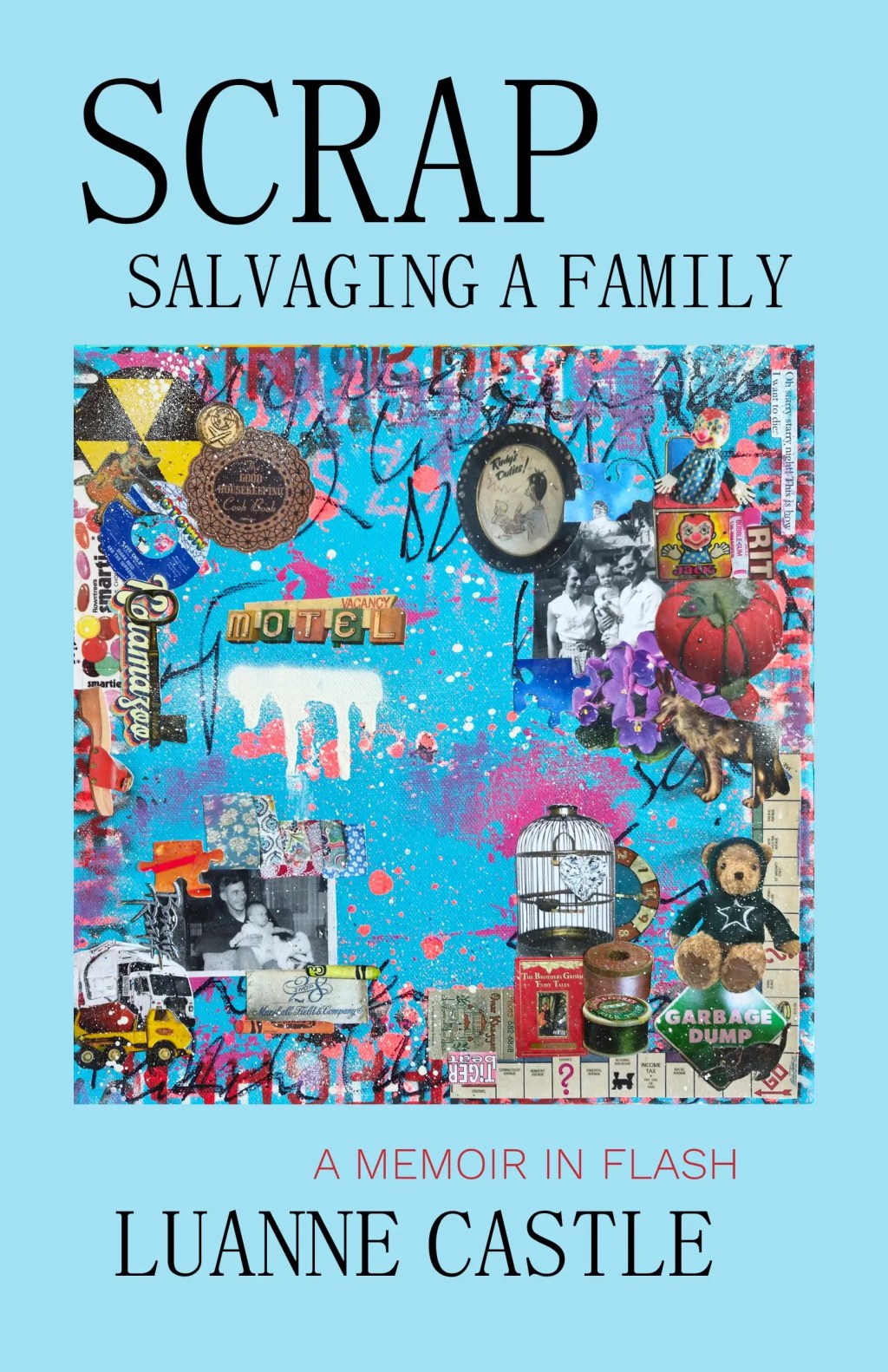

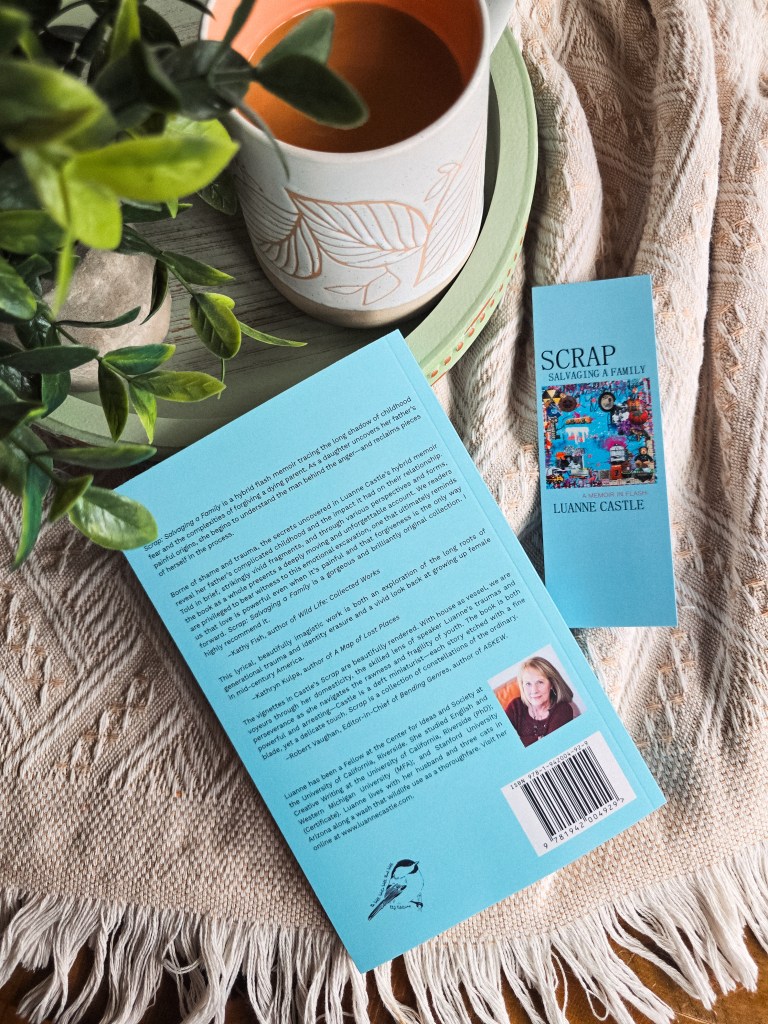
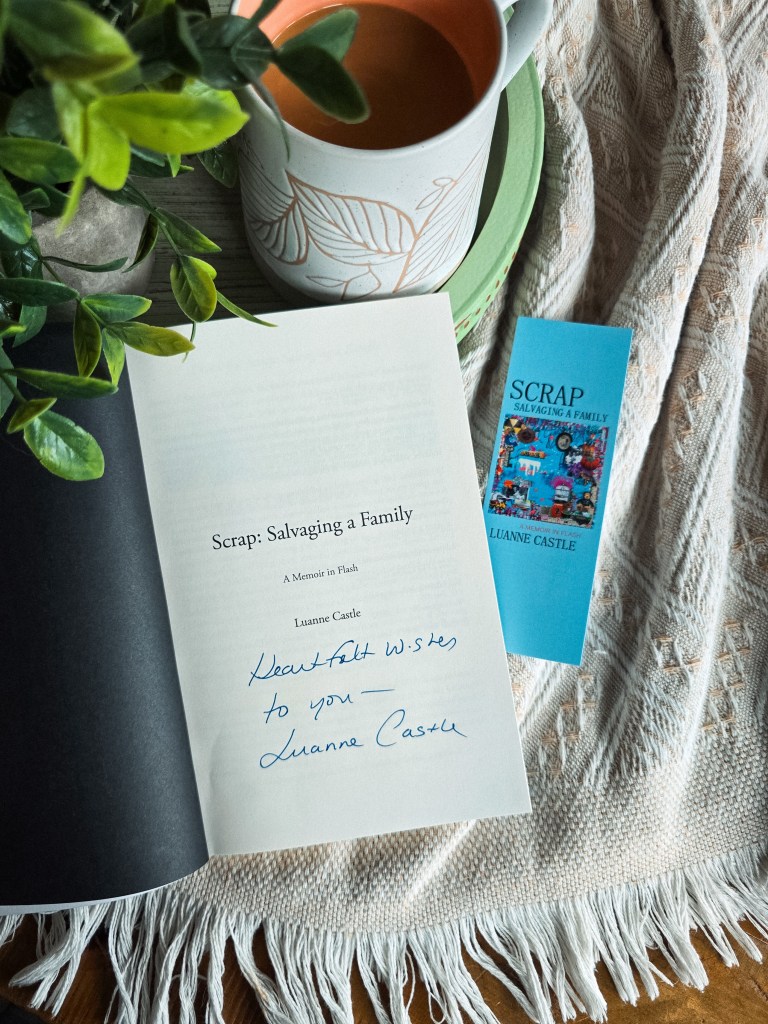
The hybrid flash memoir Scrap: Salvaging a Family explores the stain of childhood fear and anxiety on the adult spirit and the experience of reconciling with an aging or dying parent. A daughter has grown up in a household with an angry and abusive father. He keeps the secret of his biological father’s identity from his daughter for decades. When the elderly man faces his mortality, he finally names his father. The more the daughter learns about her father’s early life and origins, the more she understands him which leads to forgiveness for the past.
Published by: ELJ EditionsPublication Date: February 26, 2026
Print length: 172 pages
Shop The Book: Scrap Salvaging A Family
Shop My Stack: 2026 Books Read

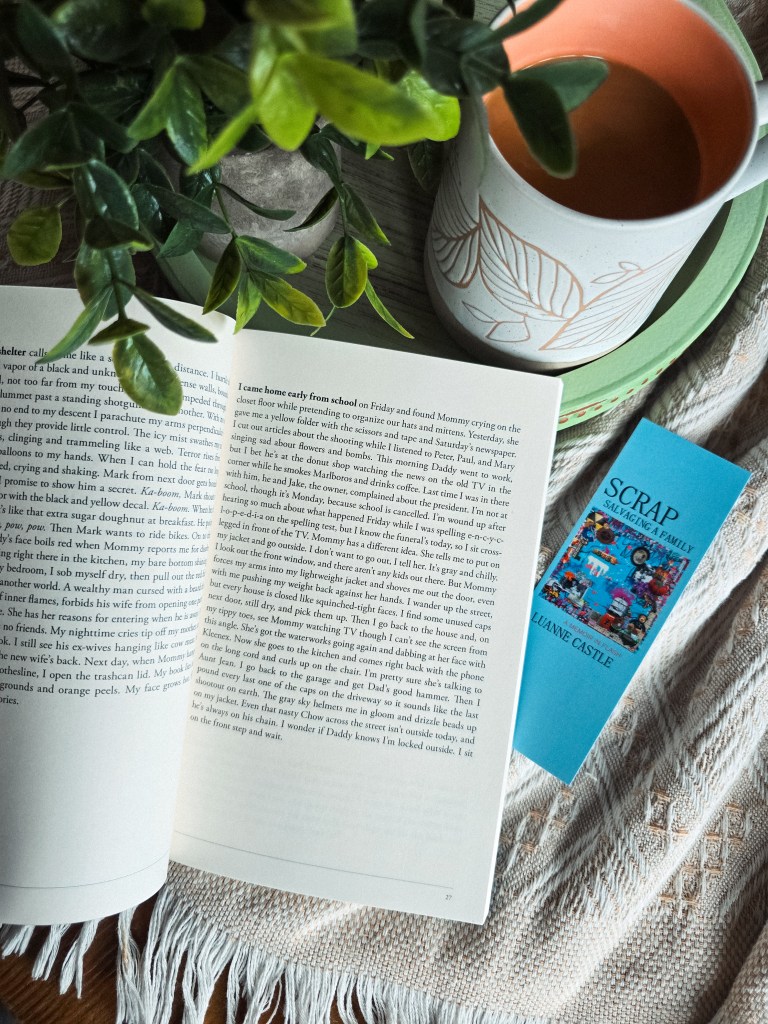
When I picked this book up, I thought it was going to be poetry. The first page really looks like poetry, and that was the expectation I went in with. But what it actually is feels more like a scrapbook of memories.
Story Structure
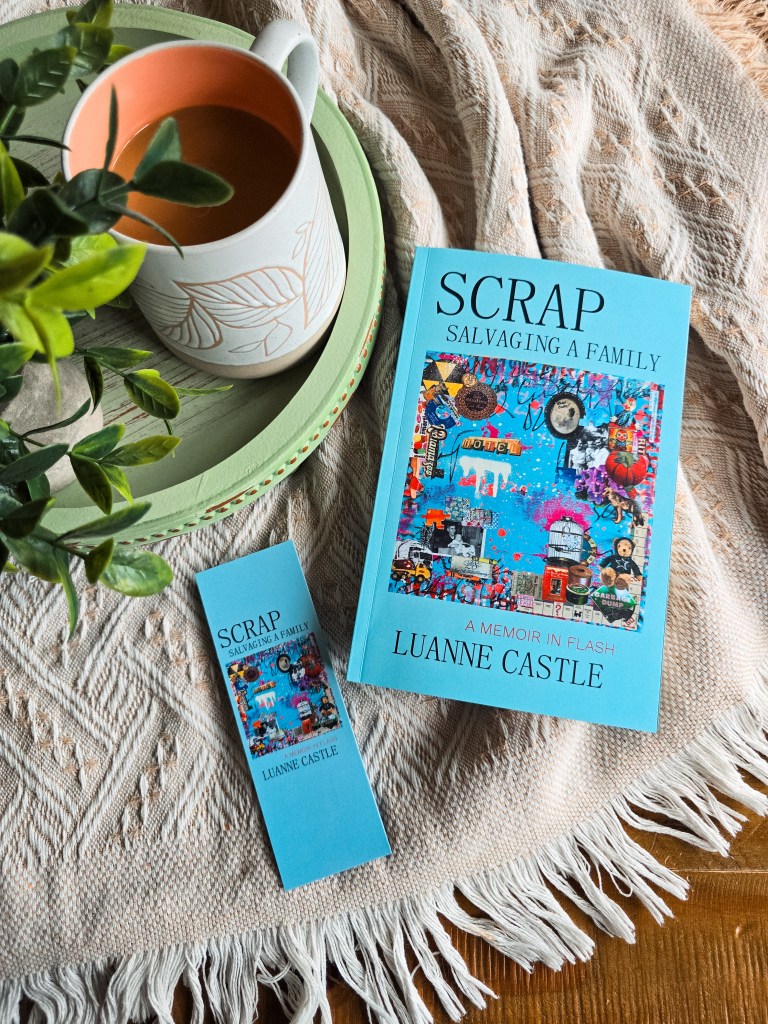
Scrap: Salvaging a Family by Luanne Castle is a memoir told in these small, snapshot-like pieces that follow her life from early childhood into adulthood. Each piece feels like a moment she has pulled from memory and set down on the page, and as you move through them, they slowly come together to form a much bigger picture of her life.
Reading Experience
What really stood out to me is how she captures childhood.
Even though she is writing from memory, it truly feels like you are inside the mind of a young child. The thoughts feel immediate and innocent, like they just happened that morning or the day before. And then as she gets older, she sometimes revisits those same memories and reframes them with a new understanding. You can see her perspective shifting as she grows, and that was one of the most interesting parts of the reading experience for me.
There are also moments where she shares how she remembers something happening, and then compares that to how a relative remembers it. It creates this quiet question throughout the book of what is actually real. Is it her version, or someone else’s version, or something in between. That tension adds another layer to the story that I was not expecting but really appreciated.
At times, this reads almost like fiction. It feels like you are following a character through her life, watching her grow and change. But then you remember that this is her real story, her real childhood, and that shift makes everything hit harder.
Tone
This is not an easy read.
There is a lot of abuse and heartache woven through these memories, and there were moments where I had to sit with what I was reading because it was hard to take in. It is always difficult to read about childhoods where there was not the love and safety that should have been there. It makes you feel that absence in a very real way.
At the same time, there is something really powerful in seeing who she becomes.
It is fascinating to see how a person grows into themselves when they did not come from a perfect or even safe environment. She shows that it is possible to come from something painful and still become someone whole. That part stayed with me just as much as the harder moments did.
Another piece that really stood out is how she explores the relationship with a parent later in life. As her father ages and approaches the end of his life, more of his own story begins to surface, including parts of his past that had been hidden for decades. As she learns more about where he came from, there is a shift in how she sees him.
It brings up that complicated space where grief, resentment, anger, love, and even forgiveness all exist at the same time. The book does not try to simplify those feelings or resolve them neatly. It allows them to exist together, which felt very honest.
I also found myself really appreciating her willingness to share this story in such a raw way. It feels like she is opening up parts of her life that are not easy to revisit and inviting the reader to sit in them with her.
Final Thoughts
I am really glad I read this!
It is different from anything I have read before, both in structure and in how it tells its story. It is thoughtful, emotional, and at times difficult, but it also offers a perspective that feels important.
Thank you Luanne Castle and Poetic Book Tours for the opportunity to read and review this book.

Luanne Castle’s poetry and prose have appeared in Copper Nickel, River Teeth, Your Impossible Voice, JMWW, Grist, Fourteen Hills, Verse Daily, Disappointed Housewife, Lunch Ticket, Saranac Review, Pleiades, Cleaver, Moon City, Moon Park, Anti-Heroin Chic, Bending Genres, BULL, The Mackinaw, The Ekphrastic Review, Phoebe, MacQueen’s Quinterly, Gone Lawn, Burningword, Superstition Review, One Art, Roi Fainéant, Dribble Drabble, Flash Boulevard, O:JA&L, Sheila-Na-Gig, Thimble, Antigonish Review, Longridge, Paragraph Planet, Six Sentences, Gooseberry Pie, Switch, and Ginosko. Her story, “Garden Seasons,” was selected for Best Microfiction 2026. She has published four award-winning poetry collections, and her ekphrastic flash and poetry collection Hunting the Cosmos is forthcoming from Shanti Arts in fall 2026. Learn more at luannecastle.com.




 Cozy Home Delight
Leave a comment